Beyond Tidiness: How a Smart Shoe Cabinet Helped Me Reclaim My Entryway—and My Peace of Mind
Remember that moment when you’re late, one shoe in hand, frantically searching for its pair under a pile of boots? I lived that chaos—until I installed a smart shoe cabinet. What seemed like a small upgrade turned into a surprising game-changer. It didn’t just organize shoes; it reshaped my mornings, reduced stress, and quietly supported a new habit: starting each day with calm, not clutter. This is how technology, quietly tucked into daily life, began to make a real difference. I didn’t expect a piece of furniture to shift my mindset, but it did. And if you’ve ever stood at your front door feeling defeated by disarray, this might be the small change you didn’t know you needed.
The Messy Reality: Living with Shoe Chaos
Let’s be honest—most of us don’t start our days in a Pinterest-perfect entryway. Mine used to look like a shoe avalanche had just occurred. Rain boots by the radiator, ballet flats kicked off mid-rush, sneakers abandoned near the coat rack. Every morning, it was the same ritual: scramble, search, sigh. I’d lose one loafer, find a sandal in the kitchen (no idea how it got there), and step on a forgotten flip-flop barefoot. It wasn’t just inconvenient—it was emotionally draining. That pile of shoes became a symbol of everything I hadn’t quite managed to get under control.
And it wasn’t only about the mess. It was the time. Five minutes here, three minutes there—add it up, and I was wasting over an hour a week just hunting for footwear. That’s precious time stolen from mornings with my kids, from coffee with my partner, from quiet moments to collect my thoughts. I started to notice how that little daily frustration spilled over. I’d snap at my daughter for taking too long to tie her shoes, even though mine were the ones missing. I’d feel flustered before I even left the house. The clutter wasn’t just physical—it was mental. It whispered, “You’re behind. You’re disorganized. You’re failing.” And that whisper grew louder with every misplaced heel.
Then there was the dust. Shoes track in dirt, moisture, city grime. Without proper storage, that buildup turns into a breeding ground for odors and allergens. I’d open the closet and catch a whiff of damp leather and old pavement. Not exactly the welcome-home scent I wanted. And guests? I began rotating who used the front door, sending everyone through the garage just to avoid the embarrassment. That shouldn’t be my reality. My home should feel like a sanctuary, not a storage unit for chaos. I knew something had to change—but I didn’t want another chore. I wanted a solution that worked with my life, not against it.
Discovering the Smart Shoe Cabinet: More Than Just Storage
The idea came to me during a late-night scroll. I wasn’t looking for a high-tech fix—just a simple shelf, maybe a rack. But then I saw a video of a sleek cabinet that lit up as someone approached, with soft trays rising gently to display each pair. I paused. That’s not just storage, I thought. That’s care. The description mentioned built-in ventilation, UV sanitization, even odor control. I was skeptical. Was this just another overpriced gadget for people who had too much time and money? But then I read the reviews—not from tech geeks, but from parents, busy professionals, people like me. One woman wrote, “It’s the first thing I see when I come home, and it actually makes me smile.” Another said her kids started putting their shoes away because “it feels like the cabinet is waiting for them.”
What struck me was how many mentioned the mental shift. They weren’t just organizing shoes—they were reclaiming peace. I realized I wasn’t just tired of the mess; I was tired of the weight it carried. So I did something I don’t usually do: I invested in myself. Not in a spa day or a new wardrobe—though I love those—but in a system that would make my daily routine smoother. I chose a model with adjustable shelves, soft-close doors, motion-sensor lighting, and a quiet ventilation fan. No Wi-Fi, no app, no complicated setup. Just smart, thoughtful design. I told myself it was about shoes. But deep down, I knew it was about creating a home that supported me, not stressed me.
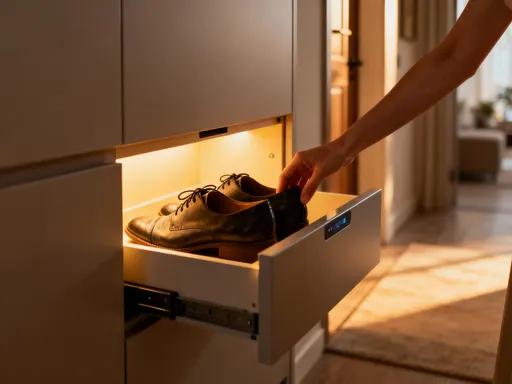
When it arrived, I assembled it in under an hour. No tools needed—everything clicked into place. I wiped down each pair of shoes, lined them up by frequency of use, and closed the door. The next morning, as I approached, the soft glow from inside lit up the entryway. I didn’t have to bend down. I didn’t have to dig. My favorite flats were right there, clean and ready. I slipped them on and stood up—no rush, no panic. And for the first time in years, I walked out the door feeling calm. Not because my life was perfect, but because one small thing had gone exactly as it should.
The First Week: From Setup to “Wait, This Actually Works”
The first few days were like watching a silent revolution unfold. I kept expecting the old habits to return—the kicked-off shoes, the piled-up mess—but something was different. The cabinet made tidying feel intuitive, almost satisfying. The gentle light that turned on when I walked near it didn’t just help me see—it created a moment of pause. Instead of tossing my shoes somewhere and rushing off, I found myself stopping, opening the door, placing them neatly in their spot. It felt like a small act of respect—for my home, for my things, for myself.
Then came the kids. I didn’t force them. I didn’t make a chart or offer rewards. I just showed them how it worked. “See? The light comes on when you’re close,” I said. “And it keeps your shoes dry and fresh.” My son, who used to leave his soccer cleats by the back door like forgotten relics, actually carried them to the cabinet. “It’s like it knows when they’re out,” he said, half-joking. But he was right. There was a quiet accountability built into the design. The cabinet didn’t shame you—it invited you in, made it easy to do the right thing.
By day five, my partner started using it too. No reminders. No arguments. He just saw me using it, saw how calm the entryway looked, and joined in. We didn’t talk about it much—just a quiet understanding that this was now “how we do things.” And that’s when it hit me: this wasn’t just about shoes. It was about creating a shared language of care. A small, consistent action that said, “We value this space. We value our time. We value peace.” And in a house full of noise and movement, that quiet consistency was golden.
How Order Sparked a New Habit: Calm Mornings, Intentional Living
Within two weeks, I noticed something subtle but powerful: my mornings had changed. I wasn’t rushing. I wasn’t frantic. I was using the two or three minutes I used to waste searching for shoes to do something kind for myself. Some days, it was stretching while I waited for the coffee to brew. Other days, it was standing by the window, watching the sunrise with a cup of tea. One morning, I even did a short breathing exercise—just four slow breaths—before grabbing my bag. That tiny pause became my anchor. It didn’t fix everything, but it set a tone. Instead of starting the day in reaction, I began in intention.
I started to see my home differently. Instead of a to-do list of chores, it became a space that could support my well-being. The smart cabinet wasn’t just storing footwear—it was creating mental space. It reminded me that small systems, when designed with care, can free up energy for what really matters. I began applying that principle elsewhere: a labeled bin for scarves, a charging station for devices, a small tray for keys and sunglasses. Each one was a tiny act of reclaiming control. And the more organized my environment became, the clearer my mind felt.
This shift wasn’t about perfection. Some days, the kids still left a shoe out. Sometimes I was in a hurry and didn’t close the door all the way. But the difference was in the recovery. Instead of letting the mess spiral, I’d take ten seconds to reset. The cabinet made it easy to return to order. And that ease made consistency possible. I wasn’t fighting against chaos—I was designing around it. And that, I realized, was the real power of thoughtful technology: it doesn’t demand more from you. It gives you back time, energy, and peace.
Unexpected Benefits: Air, Care, and a Little Joy
I didn’t expect the cabinet to improve the condition of my shoes—but it did. The built-in ventilation system gently circulates air, which means no more damp sneakers after a rainy walk or sweaty boots after a long day. Leather stays supple. Laces don’t mildew. I opened the cabinet a month after setting it up and actually smelled clean linen, not old rubber. That might sound small, but it’s not. Smell is deeply tied to memory and mood. Walking into a fresh, pleasant space—instead of one that smells like a locker room—changes how you feel the moment you walk in the door.
Then there’s the UV feature. I didn’t think I’d use it, but after a muddy hike with the kids, I turned it on. Twenty minutes later, the boots were dry, sanitized, and ready for next time. It gave me peace of mind, especially during cold and flu season. I started thinking of it as preventive care—not just for my shoes, but for my family’s health. Fewer tracked-in germs, less mold, less allergens. It wasn’t a medical device, but it contributed to a healthier home environment.
But the most unexpected benefit was emotional. I found myself smiling when I opened the cabinet. Seeing my favorite pair of navy loafers, perfectly aligned, well-cared-for, almost glowing in the soft light—it brought me joy. Not because they were expensive or trendy, but because they were respected. They had a place. They were maintained. And that respect spilled over into how I treated myself. I started polishing my shoes more often. I began choosing footwear that made me feel confident. I even started walking more—just to wear my favorite pair. That’s the thing about care: when you extend it to your belongings, it reminds you to extend it to yourself.
Sharing the Space: A Small Upgrade That Brought the Family Together
One of the most beautiful side effects was how it brought us closer. My partner, who used to stash his work shoes under the bench “out of sight, out of mind,” now places them neatly in the cabinet. “It just feels right,” he said. Our daughter started organizing her ballet slippers by color. Our son, the one who used to lose his cleats weekly, now checks the cabinet before practice. It became a shared system, a quiet agreement that we all contribute to the calm.
We even started a little family ritual: “Shoes in, mood reset.” It started as a joke, but now it’s real. When someone comes home stressed, one of us might say, “Shoes in, mood reset,” and the other will smile, take a breath, and put their shoes away. It’s not about being perfect—it’s about pausing, grounding, choosing calm. The cabinet became more than furniture. It became a symbol of how we want to live: with care, with consistency, with intention.
And that’s the thing about small changes—they don’t demand a lifestyle overhaul. They invite participation. They make the right choice the easy choice. I didn’t have to nag. I didn’t have to enforce rules. The design did the teaching. It showed us that order isn’t about control—it’s about respect. For our space, for our time, for each other. And in a world that often feels chaotic, that shared sense of order became a quiet source of connection.
The Bigger Picture: How Tiny Tech Can Nourish Daily Life
This experience taught me something important: technology doesn’t have to be flashy or complicated to be transformative. The smart shoe cabinet didn’t replace my brain or do my job for me. It didn’t automate my life. But it did remove a tiny friction point—one that, over time, had worn me down. And in removing that friction, it gave me back something priceless: mental ease.
I used to think smart home tech was for people who loved gadgets. Now I see it differently. It’s for anyone who wants to live with less stress and more intention. It’s for parents who are tired of the daily scramble. It’s for anyone who wants their home to feel like a refuge, not a battlefield. The best tech isn’t the one that impresses—it’s the one that disappears into your routine and makes life a little smoother, a little kinder, a little more peaceful.
And the ripple effects surprised me. Because I saved time at the door, I started being on time more often. Because I started my day with calm, I was more patient with my kids. Because I felt more in control of my space, I felt more in control of my choices. That one small change didn’t fix everything—but it made everything a little easier. It reminded me that well-being isn’t built in grand gestures. It’s built in the small, consistent choices we make every day. And sometimes, those choices are supported by a quiet piece of technology that simply says, “I’ve got this. You can breathe now.”
More Than a Place for Shoes—A Step Toward a Lighter Life
Looking back, I realize the smart shoe cabinet wasn’t just a solution to a clutter problem. It was a gateway to a different way of living. It taught me that the spaces we inhabit shape how we feel. That small, thoughtful design can have an outsized impact on our daily well-being. And that technology, when used with purpose, can be a quiet ally in creating a life that feels more manageable, more joyful, more like home.
It didn’t change my job, my schedule, or my responsibilities. But it changed how I moved through my day. It gave me back moments of calm. It helped me build better habits. It brought my family a little closer. And it reminded me that taking care of the small things—like where my shoes live—can be an act of self-care.
If you’re standing in your entryway, looking at a pile of shoes, feeling that familiar tug of stress, I want you to know: you don’t have to live that way. You don’t need a full renovation or a complete lifestyle reset. Sometimes, all it takes is one small, smart change to shift the energy of your home—and your heart. The right technology isn’t about keeping up with trends. It’s about designing a life that supports you, down to the smallest detail. And in that support, we find not just order, but peace. Not just tidiness, but freedom. And sometimes, in the quiet glow of a well-designed cabinet, we find the space to simply breathe—and begin again.